Building Bridges of Faith: Minna Town Hall Reaffirms Unity and Religious Rights

This post has already been read 2119 times!
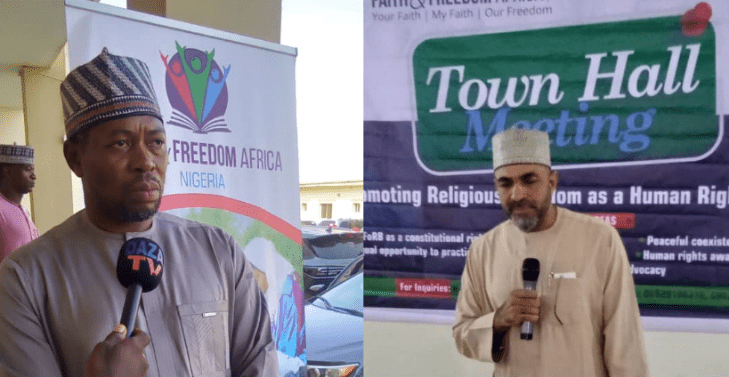
Faith and Freedom Africa advanced its nationwide advocacy for peaceful coexistence to Minna, Niger State, on Saturday, December 4, 2025, bringing together religious leaders, scholars, civil society actors, women groups, and community influencers at Haske Luxury Hotel for a town hall meeting themed “Promoting Religious Freedom as a Human Right in Nigeria.”
Representatives of the Christian Association of Nigeria (CAN), Federation of Muslim Women in Nigeria (FOMWAN), Women in Politics, WORICAN, OAIC, academia, and human rights advocates converged in what participants described as a timely forum for honest engagement and shared solutions.
The gathering opened on a reflective note as a participant highlighted a persistent public perception that religious leaders appear united at national events yet remain divided in their communities. Changing this narrative, organisers explained, lies at the core of Faith and Freedom Africa’s mission to “bring hearts together,” strengthen coexistence, and dismantle stereotypes that hinder mutual understanding across faiths.
Faith and Freedom Africa’s Country Representative, Mr. Felix Joseph Samari, steered the discussions with a compelling emphasis that understanding religious freedom must transcend theory. He outlined two key responsibilities for modern society: ensuring peaceful coexistence becomes a legacy and improving public understanding of the constitutional and moral foundations of Freedom of Religion or Belief (FoRB).
He noted that religious freedom is enshrined in Section 38 of Nigeria’s 1999 Constitution, Article 18 of the Universal Declaration of Human Rights, the International Covenant on Civil and Political Rights, and the African Charter on Human and People’s Rights. “These instruments guarantee every individual the right to adopt, practice, change, or manifest their religion without fear of persecution,” Samari stressed. The real challenge, he said, is not the absence of laws but the public’s limited grasp of these rights. “Freedom of religion does not protect any particular faith. It protects people. It is a human right, not a religious privilege.” 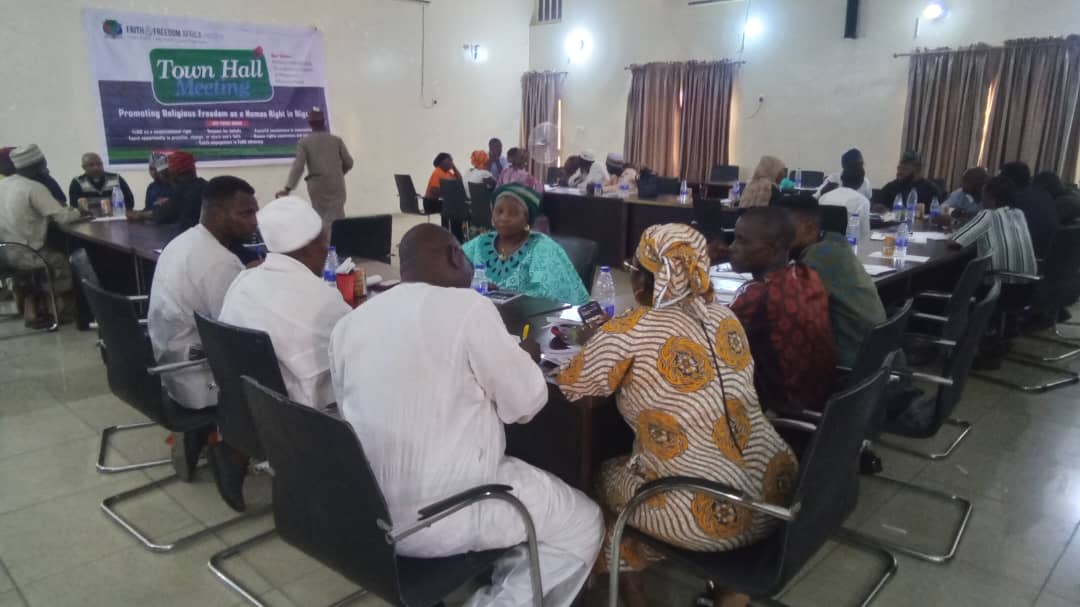
Participants acknowledged Niger State’s longstanding reputation as a centre of spiritual, cultural, and political influence. With vibrant Muslim and Christian communities, the state was described as a “power state” whose history of coexistence positions it to shape national discourse on religious tolerance. Samari added that Niger’s demographic realities make it a natural hub for dialogue: “If we understand our differences and recognize each other’s uniqueness, we can take the best from every group.”
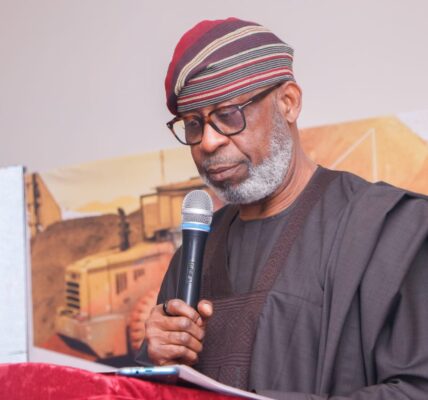
A major highlight of the event was a presentation by renowned Islamic scholar, Sheikh Nurudeen Lemu, who offered profound reflections on genuine tolerance. He maintained that Nigeria’s diversity is not a burden but a divine design that becomes an asset when mutual respect forms part of the culture. He emphasised that tolerance is not the denial of differences but the mature acknowledgment of them. Lemu denounced religious stereotyping, describing it as a seed that often grows into hatred and violence.
“Religion only becomes a source of conflict when people manipulate it for domination or self-interest,” he stated. “True faith inspires goodness, not aggression. When people understand and practice justice, fairness, and the principle of ‘live and let live,’ they strengthen the moral foundations of society.”
An interactive session moderated by Dr. Loungi allowed participants to share lived experiences of coexistence. One participant narrated the story of a Christian mother who consulted a Muslim family friend when her son considered converting to Islam. Rather than exploiting the situation, the Muslim family encouraged patience, dialogue, and mutual respect—allowing the young man to decide without coercion. 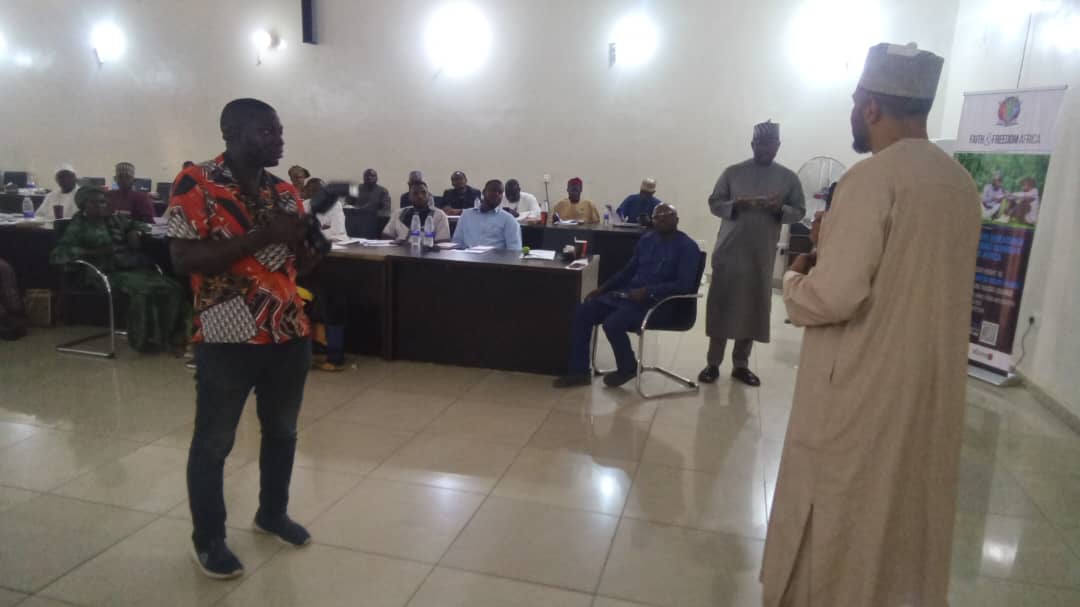
A representative of FOMWAN also shared how the organisation assisted two Christian children who had dropped out of school due to financial challenges. The group ensured the children returned to school, asking nothing in return—an act they said affirmed that humanitarian service transcends religious boundaries. Representatives from Women in Politics—including Dr. Hamzat Adebowale of Ibrahim Badamasi Babangida University, Lapai—along with delegates from WORICAN such as Mrs. Anabueze Ismail Nwafor, Esther (Treasurer), and Mrs. Grace, as well as OAIC representatives Mrs. Elizabeth Oyerinde and Rachel Akangbe, contributed meaningful insights on community-level coexistence.
A goodwill message from Dr. Nuhu Muhammad, Director of the National Human Rights Commission (NHRC) in Niger State, praised the organisers for convening an inclusive platform. He underscored that human rights and religion are not in conflict. “As a human rights defender, I celebrate this space where people of different faiths come together in the spirit of peace, respect, and shared humanity,” he said. “Our various religions teach compassion, justice, and dignity—values at the heart of human rights. When we stand together across faith lines, we send a powerful message that unity is stronger than division.”
In a segment dedicated to human and cultural diversity, Samari reminded participants that differences are part of human design, noting that even children from the same parents possess unique identities. He added that violations of religious freedom often arise from ignorance rather than hatred and may occur both between and within religious groups—reinforcing the universality of FoRB and its relevance to national development.
Unlike many interfaith engagements that focus on elites, this town hall deliberately placed everyday community voices at the centre—women, youth, neighbourhood leaders, and local influencers. “You are the ones who interact with people daily,” a facilitator said. “You see what happens in homes, markets, neighbourhoods, and schools. You are the real drivers of coexistence.”
The communiqué was read and adopted by Rev. Emmanuel Gabriel, who commended participants for their sincerity and dedication to peace.
As the town hall, moderated by Dr. Longji Dambok, drew to a close, participants reaffirmed their commitment to promoting religious freedom, strengthening community ties, and ensuring that all Nigerians—regardless of faith—can live, worship, and thrive without fear. “If we fail to appreciate the uniqueness of others, we miss the benefits that diversity brings,” one speaker noted. “But if we embrace our differences, Nigeria will be happier, stronger, and better for future generations.”
The Minna Town Hall concluded with a shared pledge to continue spreading the message of peace and defending the dignity and rights of all citizens—rekindling hope that Nigeria can rise above its divisions and model coexistence for the world.