2027: Agada Challenges Presidential Candidates To Replace Slogans With Facts, Figures, Timelines

This post has already been read 238 times!
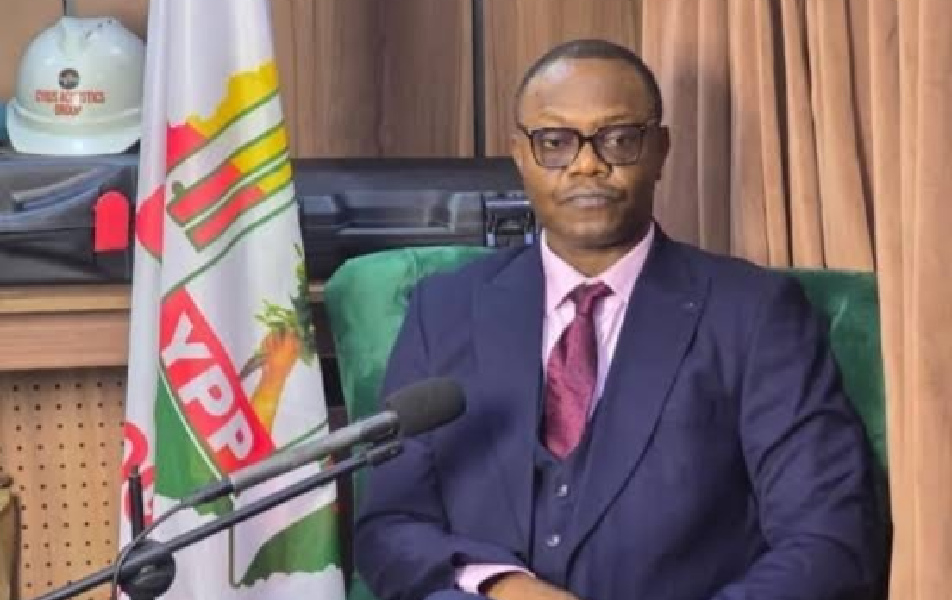
ABUJA — The Young Progressives Party (YPP) presidential candidate, Arc. Dr. Peter Agada, has challenged political contenders ahead of the 2027 general elections to move beyond rhetoric, ethnic sentiments and vague campaign promises, insisting that Nigerians deserve measurable policies backed by verifiable data, precise timelines and clear implementation plans.
Agada made the call during an interactive session with political correspondents in Abuja over the weekend, where he argued that Nigeria’s persistent governance challenges are partly linked to the tendency of elected administrations to spend substantial portions of their tenure establishing committees and diagnosing problems instead of implementing clearly defined solutions.
According to him, political campaigns in Nigeria have for decades been dominated by broad promises that are rarely subjected to rigorous scrutiny regarding how, when and with what resources such promises would be delivered.
“For decades, political campaigns in Nigeria have been treated like poetry contests,” Agada told journalists.
“Candidates stand on podiums and promise ‘one million jobs’ or ‘revamped healthcare,’ but nobody asks them the fundamental engineering questions: How exactly will it be done? When will the first delivery happen? What are the exact numbers, facts, and figures behind the intervention?”
The YPP candidate maintained that prospective leaders seeking executive office should be able to provide concrete answers to such questions before asking Nigerians for their votes.
He said the 2027 election should therefore become an opportunity for voters to interrogate candidates on the feasibility, timing, funding and measurable outcomes of their proposed programmes rather than relying solely on political slogans.
Agada Unveils LabourDirect
Responding to questions on how his campaign intends to promote greater accountability and execution in a political environment accustomed to conventional campaign methods, Agada unveiled LabourDirect as a central component of his proposed approach to addressing what he described as Nigeria’s execution deficit.
He described the cross-sector digital platform as “Government with GPS”, explaining that it is designed as a governance engine integrating policy planning, budgeting and spatial mapping across Nigeria’s 774 Local Government Areas and 8,809 wards.
According to Agada, LabourDirect is intended to address the fragmentation that often occurs when government ministries and agencies implement projects without adequate coordination.
“LabourDirect is designed to eliminate the ‘silo planning’ that renders public spending ineffective,” he said.
He gave the example of a Primary Healthcare Centre constructed in a rural ward without the supporting infrastructure required to make it functional.
“Today, the Ministry of Health builds a Primary Healthcare Centre in a rural ward, but because they don’t coordinate with the Ministry of Works or Power, you end up with a facility that has no access road, no water supply, and no electricity,” he explained.
Agada said LabourDirect would identify such interdependencies during the planning and budgeting stages, allowing complementary infrastructure to be incorporated into the overall intervention.
“It tells you that to build a functional hospital in LGA X, you must simultaneously budget for 3 kilometres of feeder road and a solar microgrid,” he said.
Citizens To Track Projects
Addressing concerns over the fate of previous government policy documents and development blueprints that failed to translate into measurable projects, Agada argued that LabourDirect would differ by placing project monitoring and ownership directly within the reach of citizens, organised labour and professional bodies.
“This is not a white paper locked in a cabinet; it is a live, citizen-owned system monitored by the NLC, TUC, ordinary Nigerians and all other professional bodies in a National Council of Procurement based EPC Reforms,” he said.
Under the proposed system, Agada said citizens would be able to monitor projects located within their communities, including their approved budgets and construction milestones, using their mobile phones.
He further explained that citizens would be able to upload photographic evidence where projects were delayed, abandoned or otherwise failed to meet expected standards.
According to him, such a system would strengthen transparency and accountability while providing relevant anti-corruption agencies with timely information on projects requiring investigation.
“If a contractor abandons a site, the system automatically alerts anti-graft agencies. No more lost projects. No more wasted years,” Agada said.
‘Show Nigerians The Map, Figures, Timeline’
The YPP presidential candidate subsequently challenged other presidential contenders to subject their manifestos to the same level of scrutiny, urging them to provide Nigerians with specific and measurable details of their proposed interventions.
He said the electorate should demand more than promises, arguing that credible political programmes must demonstrate how proposed policies would translate into tangible outcomes across communities.
“Let us stop selling hope without a tape measure. Show Nigerians the map, show them the figures, show them the timeline, and let the facts speak,” Agada said.
His position places implementation, measurable outcomes and citizen oversight at the centre of his campaign argument ahead of the 2027 presidential election.