Anaba Tasks INEC, Media On Stronger Partnership For Credible Polls

This post has already been read 2118 times!
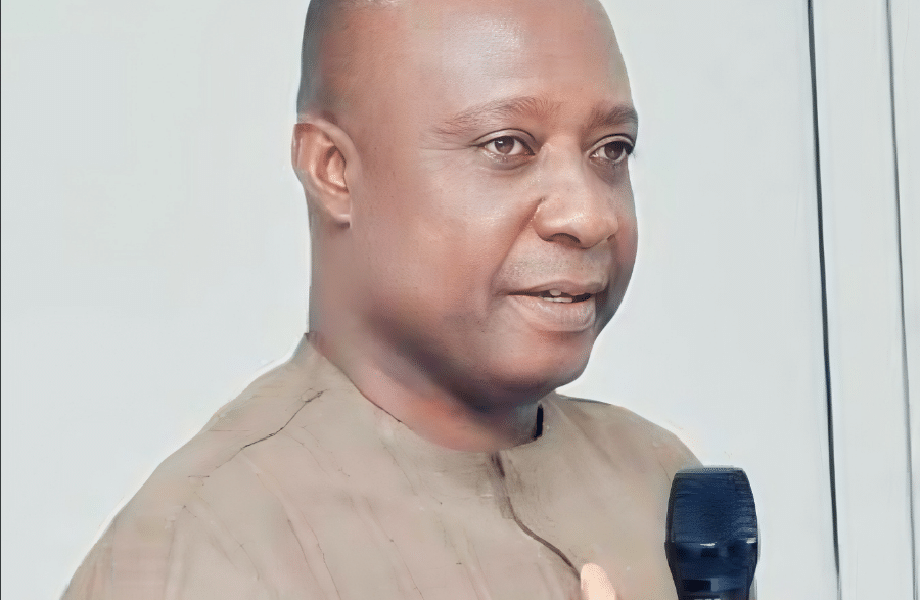
The President of the Nigerian Guild of Editors (NGE), Mr. Eze Anaba, has called on the Independent National Electoral Commission (INEC) and the Nigerian media to deepen their partnership and develop stronger strategies for credible electoral communication and reporting.
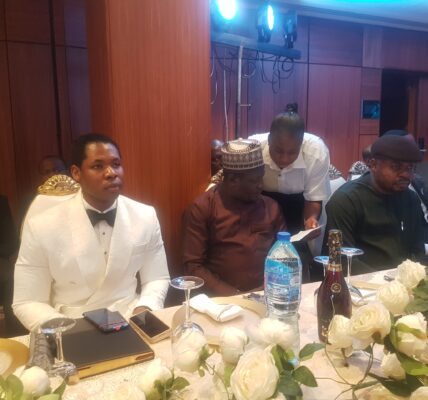
Anaba made the call on Monday, October 5, 2026, in Abuja at the INEC–NGE Strategic Workshop organised by INEC in collaboration with the Nigerian Guild of Editors.
He described the workshop as timely, particularly as the country approaches another round of elections, saying stronger engagement between the electoral management body and media leadership was essential at a time when the credibility of the democratic process remained a matter of profound national importance.
Welcoming the INEC Chairman, Prof. Joash Amupitan, SAN, Commissioners, members of the Nigerian Guild of Editors, senior officials of the Commission and other media stakeholders, Anaba expressed appreciation to INEC for facilitating the engagement.
According to him, elections go beyond the casting of ballots, as their credibility ultimately depends on the confidence of citizens in the electoral process and institutions responsible for conducting it.
“Elections are not merely about casting ballots. They are about trust,” he said, stressing that citizens must believe that their votes will count, that the process will be transparent and that electoral institutions will act fairly and professionally.
Anaba said the media had a critical responsibility in building and sustaining that trust because editors determine, to a significant extent, the information that reaches the public, how it is presented and the context in which it is understood.
He therefore urged editors and journalists to uphold accuracy, fairness, balance and the public interest in their coverage of electoral processes.
At the same time, the NGE President stressed that the media could not effectively discharge its responsibilities without credible, timely and accessible information from INEC.
He said this had become particularly important in an environment increasingly affected by misinformation, disinformation, manipulated content, deepfakes and partisan narratives.
“In an environment increasingly polluted by misinformation, disinformation, manipulated content, deepfakes and partisan narratives, the relationship between INEC and the media must therefore be one founded on openness, mutual respect and regular engagement,” he said.
Anaba said the strategic workshop should enable both institutions to look beyond their traditional relationship and confront critical questions surrounding electoral communication and reporting.
He challenged participants to examine how INEC could communicate more effectively with citizens, how journalists and editors could improve the accuracy of electoral reporting, and how stakeholders could combat disinformation without suppressing legitimate criticism.
He also urged the media and electoral management body to explore ways of deploying the enormous reach and influence of the media to strengthen citizens’ confidence in elections.
According to him, credible elections cannot be the sole responsibility of INEC, but require the collective commitment of all stakeholders in the democratic process.
“The Guild believes strongly that a credible election is a shared responsibility,” Anaba said.
“INEC has its constitutional mandate; political parties and candidates have their responsibilities; the media has its own obligations; and ultimately, citizens must be adequately informed and empowered to participate in the democratic process.”
He further emphasised the connection between media credibility and electoral credibility, declaring that the reliability of information provided to citizens was central to public confidence in elections.
“The credibility of the media is itself an essential component of the credibility of the electoral process,” he said.
The NGE President consequently urged participants to approach the workshop with candour, open-mindedness and a willingness to listen, while encouraging them to identify existing gaps in the relationship between INEC and the media.
He called for honest discussions on the challenges confronting electoral communication and reporting, as well as practical strategies that could improve the flow of information and the quality of electoral coverage.
Anaba reaffirmed the commitment of the Nigerian Guild of Editors to working with INEC and other stakeholders to promote elections that Nigerians could trust and a media that citizens could rely upon for credible information.
He expressed the hope that the engagement would not end with the workshop but would lead to a stronger, more structured and continuous partnership between INEC and the Nigerian media.
“I am confident that the conversations we begin here will not end with this workshop. Rather, they should mark the beginning of a stronger, more structured and continuous partnership between INEC and the Nigerian media,” he said.
He wished participants fruitful deliberations and meaningful outcomes, while concluding with a prayer for the Federal Republic of Nigeria.