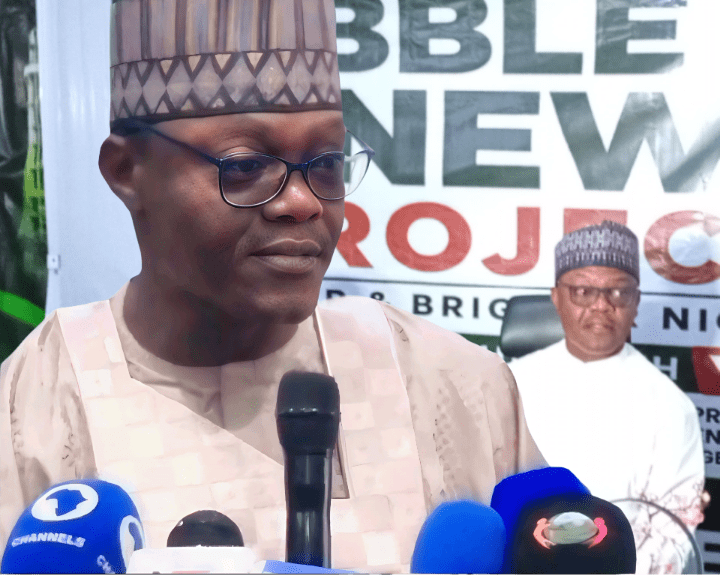
2027: YPP Presidential Hopeful Peter Agada Unveils Security, Power and Economic Recovery Plans

This post has already been read 2644 times!
Presidential hopeful of the Young Progressives Party, YPP, Arc. Dr. Peter Agada, has outlined what he described as a comprehensive blueprint for addressing Nigeria’s security, power and economic challenges ahead of the 2027 general elections.
Speaking during an interview on Peoples 105.5 FM Abuja, Agada said he possesses the experience, policy expertise and leadership capacity required to govern Africa’s most populous nation.
The architect, infrastructure policy strategist and former Director of Finance of the Obedient Movement argued that his more than two decades of involvement in public policy development and large-scale project management qualify him to seek Nigeria’s highest office.
According to him, he has participated in developing policy proposals for past presidential campaigns and has spent years advising government officials on infrastructure and development matters.
Agada also defended his decision to seek the presidency despite never holding an elective political office, insisting that leadership is fundamentally about managing people, projects and resources.
The YPP presidential hopeful used the interview to explain his departure from the Obedient Movement and later the Labour Party.
While describing former Labour Party presidential candidate Peter Obi as a “fantastic leader” and one of the most admirable personalities he has encountered, Agada said their separation was driven largely by disagreements over organisational structure and political strategy.
He maintained that he still shares many of Obi’s developmental ideals but believed there should be stronger institutional structures within political movements.
On his exit from the Labour Party, Agada alleged that he was unfairly treated after investing significant resources and effort towards reconciling rival factions within the party before being disqualified from its presidential race.
He also reiterated his demand for the refund of funds allegedly expended during the process.
Turning to national issues, Agada identified insecurity as Nigeria’s most urgent challenge, arguing that many economic problems currently facing the country are directly linked to the inability of farmers, miners and businesses to operate safely.
He revealed that he was part of a team that developed a technology-driven military surveillance and intelligence infrastructure proposal several years ago and expressed confidence that modern technology and indigenous innovation could significantly improve Nigeria’s security architecture.
On electricity supply, Agada advocated a decentralised power generation model built around mini-grids and renewable energy solutions, particularly solar power.
According to him, localised electricity generation for residential communities and small businesses would reduce pressure on the national grid and improve access to power across the country.
The presidential hopeful also stressed the need for industrialisation, agricultural development and wealth creation, saying government must focus on creating opportunities for citizens to earn sustainable incomes rather than relying solely on intervention programmes.
In a notable policy position, Agada said he would not reverse major economic reforms introduced by President Bola Ahmed Tinubu, including the removal of fuel subsidy.
However, he argued that taxation and market reforms must be accompanied by policies that expand citizens’ earning capacity and improve productivity.
He also rejected the zoning of political offices, insisting that competence rather than ethnicity or regional considerations should determine who leads Nigeria.
Agada expressed confidence in the organisational strength of the Young Progressives Party and said the party was building structures across the country in preparation for the 2027 elections.
He pledged that his campaign would focus on security, infrastructure development, power sector reform, industrialisation and economic growth.