BROKEN INFRASTRUCTURE, BROKEN TRUST: Investors Abandoned as Kwara’s ‘New GRA’ Collapses into Neglect

This post has already been read 21367 times!
In what is fast becoming a cautionary tale for real estate investors and urban development stakeholders, residents of the New Government Reserved Area (GRA) Budo-Osho in Ilorin have decried over a decade of infrastructural neglect and regulatory failure by the Kwara State Government, despite heavy financial commitments made by plot owners who bought into the state’s vision of a “world-class” residential estate.
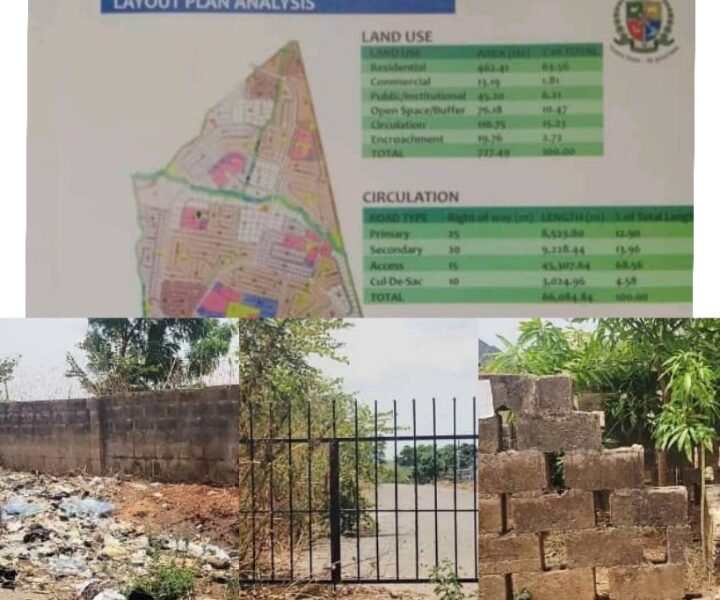
Marketed as a flagship urban expansion project, the Budo-Osho GRA was conceived in 2008 under the administration of former governor Bukola Saraki to address increasing housing demand in Ilorin. With a 710-hectare master plan, clearly delineated land-use zones, and promises of modern infrastructure, the project attracted hundreds of middle- and upper-income investors who paid millions of naira for plots, many drawn by the government-backed assurance of immediate development readiness.
By 2013, the project had reached its ceremonial peak when it was commissioned by former governor Abdulfatah Ahmed. At the time, government officials claimed billions of naira had already been invested in infrastructure, with roads, drainage systems, and electrical frameworks reportedly nearing completion. However, more than ten years later, residents say the commissioning marked not the beginning of a thriving estate, but the abrupt end of government involvement. 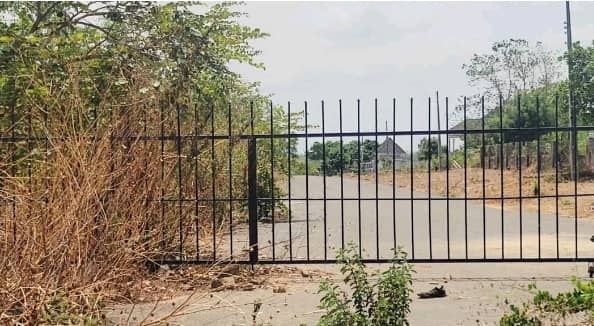
Today, the estate reflects a stark disconnect between policy ambition and execution. Eight transformer stations constructed across the layout remain empty, with no connection to the national grid. Residents disclosed that transformers initially installed were later removed by government authorities and never replaced, leaving the entire estate without public electricity supply.
The implications have been both economic and social. Households now depend on privately funded alternatives such as generators and solar systems, significantly increasing the cost of living and eroding the investment value of the estate. Streetlight poles, installed but never energized, have become easy targets for vandals, with many already dismantled and stolen due to the absence of functional security systems.
Equally concerning is the complete failure of public water infrastructure. Despite explicit guarantees of adequate water supply in official project documentation, residents confirm that not a single government-provided water source exists within the estate. The burden has shifted entirely to individuals, who have had to finance borehole installations independently, effectively duplicating infrastructure that formed part of the original sales proposition.
From a regulatory standpoint, the integrity of the estate’s master plan is also under threat. Investigations reveal increasing cases of unauthorized land-use conversion, particularly the development of commercial establishments on plots designated strictly for residential purposes. Residents allege that enforcement agencies have failed to act, especially in cases involving individuals with political or institutional connections. 
According to the Chairman of the residents’ association, Alhaji Mumeen Adegboye, the uneven application of planning laws has created a two-tier system within the estate. “The rules exist, but they are not enforced equally. Those with influence do as they please, while law-abiding investors bear the consequences,” he stated.
Security concerns have further compounded investor anxiety. In the absence of any government-provided security framework, residents were compelled to finance and construct access control gates across the estate. This self-help approach, while partially effective, underscores what stakeholders describe as a systemic abdication of responsibility by the authorities.
Environmental risks are also emerging as a critical issue. Illegal sand mining operations have been reported on multiple undeveloped plots, with tipper operators excavating and removing soil without authorization. Beyond the immediate economic loss to landowners, experts warn that such activities could trigger ground instability, potentially compromising building foundations and increasing long-term structural risks within the estate.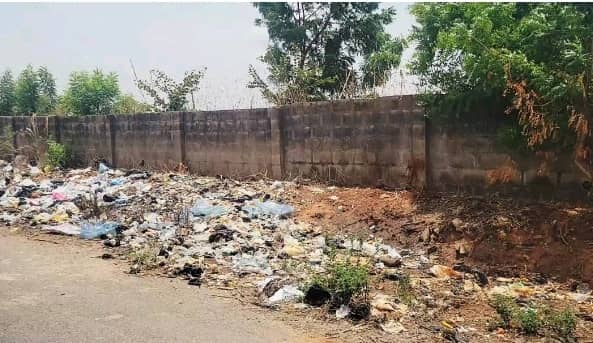
The General Secretary of the residents’ association, Olaitan Salihu, described the situation as both alarming and unsustainable. “This is not just about land theft; it is about environmental safety. The scale of excavation poses real risks to the structural integrity of the entire neighbourhood,” he said.
Adding to the estate’s challenges is the proliferation of unmanaged waste dumps on designated open spaces, raising serious public health concerns. Despite formal complaints to the Kwara State Environmental Protection Agency, residents report no visible intervention, further reinforcing perceptions of institutional neglect.
A review of correspondence between the residents and government agencies paints a picture of sustained civic engagement met with official silence. Over the years, multiple petitions have been submitted to the Ministry of Energy, the governor’s office, and other regulatory bodies, detailing the estate’s infrastructural deficits and regulatory breaches. While occasional inspections have been conducted, no substantive policy or operational response has materialized.
For investors, the situation raises broader questions about governance, accountability, and the credibility of government-backed real estate schemes. Analysts note that the failure to deliver on core infrastructure commitments not only undermines property values but also weakens investor confidence in future public-sector-driven housing initiatives.
Residents maintain that their demands are straightforward and grounded in prior commitments. They are calling for the installation of transformers in existing facilities, activation of street lighting systems, provision of a functional water network, strict enforcement of zoning regulations, and decisive action against illegal sand mining and waste dumping. They also seek the establishment of a formal estate management framework that includes resident participation to ensure transparency and accountability.
More than a decade after its high-profile launch, the New GRA Budo-Osho stands as a stark reminder that infrastructure promises, when left unfulfilled, can translate into long-term economic and social liabilities. For the residents who invested their savings based on government assurances, the issue is no longer about expectation, but about restitution.
As of press time, the Kwara State Government has yet to issue any official response to the concerns raised. Meanwhile, in Budo-Osho, investors continue to shoulder the burden of a project that was sold as a partnership, but has functioned, in practice, as a one-sided transaction.