Cross River LG Chairmen Endorse Governor Otu’s N987.8bn Budget, Promise Grassroots Replication

This post has already been read 231 times!
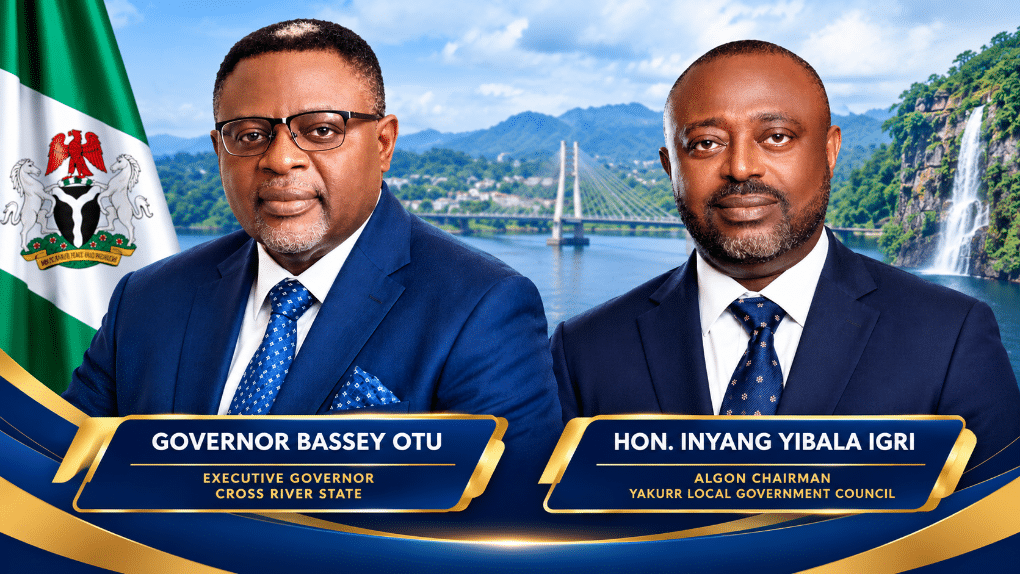
The Association of Local Governments of Nigeria (ALGON), Cross River State chapter, has resolved to domesticate Governor Bassey Otu’s N987.8 billion 2027 Budget of Consolidation and Renewed Hope across the state’s 18 local government areas, in a move aimed at strengthening grassroots development and ensuring coordinated implementation of government policies.
The association said all 18 local government councils would adopt the budget’s development philosophy, planning methodology and implementation approach in preparing their respective 2027 budgets to ensure that the state government’s priorities are effectively extended to communities and wards.
The Cross River State ALGON Chairman and Executive Chairman of Yakurr Local Government Area, Hon. Yibala Inyang, disclosed this in a statement issued in Ugep, Yakurr LGA, on October 26, 2026.
Inyang, who spoke on behalf of the 18 council chairmen, described the proposed N987.8 billion budget as a people-oriented development framework that recognises the needs of rural communities and places grassroots welfare at the centre of governance.
He said the budget’s emphasis on rural roads, primary healthcare, basic education, food security and human capital development informed the association’s decision to adopt it fully.
According to him, the initiative is designed to establish a complementary relationship between the state and local governments, ensuring that development interventions at the two levels of government are properly aligned.
Describing the budget as a “village budget”, Inyang said its provisions reflected the everyday concerns of farmers, fishermen, traders, women, children and other vulnerable groups whose welfare should remain the ultimate objective of governance.
He explained that the 18 councils would not merely endorse the state government’s budget but would incorporate its underlying principles into their own appropriation processes, with particular attention to accountability, institutional capacity and measurable development outcomes.
The ALGON chairman disclosed that the legislative arms of the local governments would play critical roles in the process, working with council chairmen, councillors and legislative speakers to develop appropriate budgetary frameworks and strengthen oversight.
He said the collaboration would ensure that the 2027 local government budgets reflected the genuine needs of the various wards and communities while providing the institutional mechanisms required to monitor public expenditure.
Inyang emphasised that the initiative was also intended to promote continuity in governance by building strong institutions capable of sustaining development programmes beyond the tenure of individual political officeholders.
“A good Chairman can build a road, but only a good institution can maintain it after he leaves,” he said, stressing that public resources must be channelled towards projects and programmes capable of delivering lasting benefits.
He added that the councils would subject their proposed expenditures to productivity assessments, insisting that every allocation must demonstrate its relevance to the welfare and economic advancement of the people.
“Every naira we budget must answer what it produces for the farmer in Ekori, the fisherman in Esighi, and the young girl learning a trade in Ikom. If it cannot create measurable benefit for the people, we will not fund it,” he stated.
On the social development component of the initiative, Inyang said the local governments would complement the state government’s investments through interventions in local justice administration, functional customary courts, market dispute resolution and community security.
He noted that the provision of rural infrastructure, access to potable water, effective healthcare services and quality basic education must be treated as enduring governance priorities rather than temporary political programmes.
The ALGON chairman further identified primary healthcare, basic education, rural roads, water supply and economic productivity as non-negotiable areas requiring sustained attention at both state and local government levels.
He said the association had consequently undertaken to monitor the implementation of the state budget, take ownership of its development objectives and complement its interventions through appropriately aligned local government projects.
According to him, the councils would also ensure that the provisions of the budget are communicated to residents in languages they understand, thereby empowering them to participate in governance and demand accountability from elected officials.
Illustrating the importance of coordination between the two tiers of government, Inyang said while the state government could construct major highways, local governments would provide access roads connecting farming communities to markets.
Similarly, he said the state’s investments in hospitals would be complemented by efforts to strengthen primary healthcare centres, while local government interventions would help sustain development initiatives within individual communities.
“This N987.8 billion is not a figure on paper in Calabar, it is garri in the market in Ugep, it is light in the school in Obudu, it is drugs in the health centre in Yakurr,” he declared.
He assured Cross River residents that the 18 local government councils would work collectively to ensure that the development philosophy underpinning Governor Otu’s proposed budget was reflected in their respective spending plans.
Inyang reaffirmed the association’s commitment to supporting the governor’s administration, maintaining that effective coordination between state and local governments would strengthen institutional governance, deepen grassroots participation and ensure that development reaches communities across Cross River State.