
FG, Private Sector Unveil Ambitious Tourism Infrastructure Blueprint to Reposition Nigeria Globally

This post has already been read 2706 times!
Nigeria may be on the verge of a major tourism renaissance following the unveiling of an ambitious infrastructure-driven development framework designed to reposition the country as one of Africa’s leading global tourism destinations.
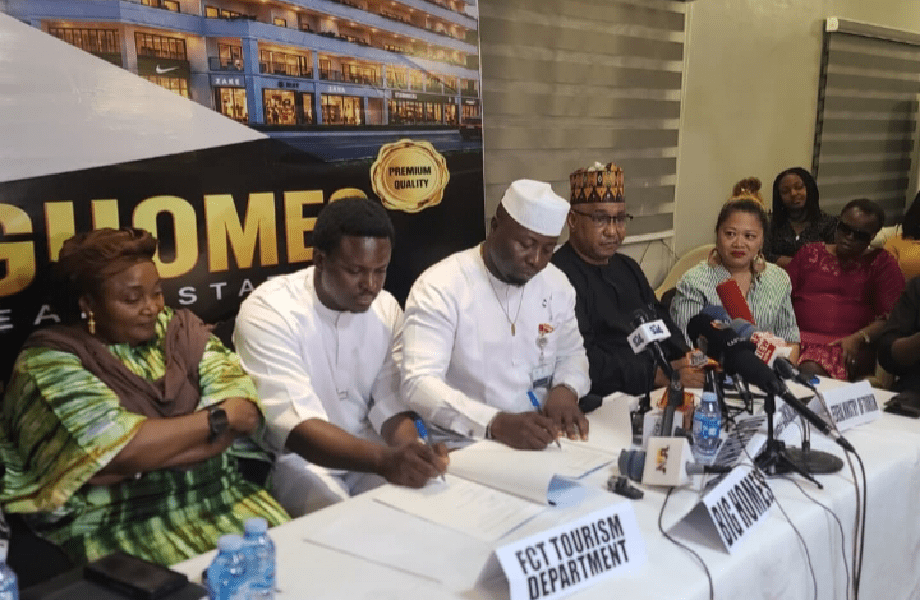
At a high-level stakeholders’ engagement in Abuja, key players across the public and private sectors signed a strategic pact under the National Infrastructural Tourism Development Initiative (NITDI), a comprehensive roadmap expected to redefine how tourism is developed, financed and integrated into Nigeria’s broader economic growth strategy between 2026 and 2030.
The initiative, which has received the backing of the Federal Government, seeks to unlock Nigeria’s vast cultural, historical and natural assets through deliberate investment in infrastructure, urban planning, real estate integration and sustainable tourism ecosystems.
The unveiling, which also served as a prelude to activities marking the 2026 World Tourism Day celebration, drew tourism investors, developers, policymakers and infrastructure experts who described the initiative as a bold step toward economic diversification beyond oil.
Speaking at the event, Director of Tourism Projects and Investment at the Nigerian Tourism Development Authority (NTDA), Chris Okafor, said the Federal Government was fully aligned with efforts to reposition tourism as a major contributor to national development.
According to him, the initiative represents a strategic shift in national thinking, placing tourism at the centre of investment, job creation and sustainable economic growth.
“We have a very energetic and passionate tourism community, and we are already partnering with key stakeholders to drive this process. This initiative will not fail,” he said.
Okafor lamented that despite Nigeria’s enormous tourism potential, the sector had remained underdeveloped largely because the country depended heavily on oil revenues for decades.
“Countries without oil are thriving on tourism, while we have been somewhat blindfolded by oil. This is a step in the right direction,” he stated.
He stressed that tourism development could no longer be left solely in the hands of government, calling for stronger collaboration with the private sector, developers and investors.
“It is everybody’s work. When government begins to see the level of activity in the sector, it will key in more strongly. That is how it works globally,” he added.
As part of efforts to modernise the sector, Okafor disclosed plans to deploy digital solutions, including an “African Tourism App,” aimed at improving visibility for tourism destinations and infrastructure across the continent.
At the heart of the new framework is the conviction that tourism can only thrive where infrastructure exists. This position was strongly emphasised by the Executive Director of Tourism Volunteers Network, Phil Roberts, who described infrastructure as the missing link in Nigeria’s tourism development journey.
Drawing from his experiences travelling across Nigeria and other parts of the world, Roberts argued that the country must move beyond merely identifying tourist attractions and instead build complete destinations capable of competing globally.
“A tourism site remains stagnant, but it becomes a destination when supported with infrastructure—good roads, electricity, housing, internet, food systems and security,” he said.
According to Roberts, one of the major problems confronting Nigeria’s tourism sector is the gap between “tourism sites” and “tourism destinations.”
He explained that countries such as China, Dubai and the United States successfully transformed their economies by deliberately using infrastructure as a catalyst for tourism growth, urban renewal and investment attraction.
“We do not need to take our money abroad for tourism experiences. With the right infrastructure, Nigeria can become the destination the world comes to see,” he added.
In what many observers described as one of the most ambitious aspects of the initiative, Roberts announced that Abuja had been designated as a “Living Infrastructure Tourism City,” a pilot model expected to guide implementation across other states of the federation.
Under the proposed tourism zoning structure for the Federal Capital Territory, Aso Rock will serve as an iconic tourism hub, while Jabi Lake is projected as a waterfront tourism destination. Maitama and Asokoro are expected to evolve into luxury tourism centres, whereas Mpape and Katampe will be developed for nature and adventure tourism. Bwari and AMAC are also being positioned as agro-tourism corridors.
Stakeholders said the zoning strategy was designed to maximise Abuja’s unique assets while creating integrated visitor experiences capable of attracting both domestic and international tourists.
Roberts further explained that the NITDI framework seeks to integrate tourism with infrastructure development, housing and real estate planning in ways that encourage sustainable urban development, create jobs and attract foreign direct investment.
“Every building should be designed as a potential destination, where people can visit and have unique experiences,” he said.
He also identified financing as one of the biggest challenges limiting tourism growth in Nigeria, noting that stronger partnerships with institutions such as the Nigerian Tourism Development Authority and other relevant agencies would be critical for policy coordination and investment mobilisation.
The private sector, meanwhile, signalled strong readiness to drive the transformation agenda.
Managing Director of Big Homes Nigeria, Topsy Essien, said the company was already investing in sustainable, tourism-friendly communities within Abuja, with major projects underway in Jabi, Dakibiyu and Durumi.
According to Essien, the developments are being designed as integrated ecosystems that combine housing, healthcare, recreation and commercial services in ways that enhance both quality of living and tourism appeal.
“Sustainable communities are self-sufficient. They provide everything residents need while also creating attractive environments for visitors,” he said.
Essien also advocated for the adoption of indigenous architectural styles that reflect Nigeria’s culture, identity and climate conditions, arguing that authenticity would significantly strengthen the country’s attractiveness to international tourists.
Industry observers at the event expressed optimism that if effectively implemented, the initiative could help Nigeria reduce tourism-related capital flight, stimulate local economies, generate employment and reposition the country as a competitive destination within the global tourism market.
The stakeholders also announced that the Infrastructural Tourism Development Summit 2026 would hold in Abuja on September 24 under the theme: “Building Today, Building Tomorrow: Infrastructure for a Stronger Tourism Future.”
Analysts say the summit is expected to deepen policy alignment, attract investors and further consolidate efforts toward building a tourism economy capable of contributing significantly to Nigeria’s post-oil future.