NDC Unveils Power Rotation Deal As Obi, Kwankwaso Lead Opposition Coalition Ahead of 2027

This post has already been read 2565 times!
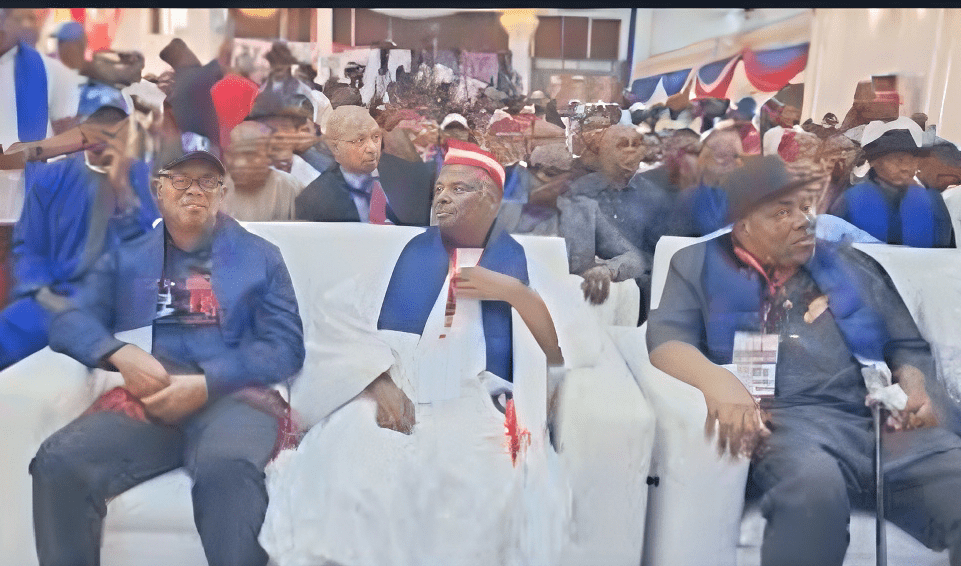
A major opposition coalition took shape in Abuja on Saturday as prominent Nigerian political figures gathered for the maiden National Convention of the Nigeria Democratic Congress (NDC), where far-reaching resolutions on power rotation, democratic reforms and national unity were adopted ahead of the 2027 general elections.
The convention, which attracted delegates and political stakeholders from across the country, saw former Anambra State Governor and 2023 Labour Party presidential candidate, Peter Obi, former Kano State Governor, Rabiu Musa Kwankwaso, and NDC National Leader, Seriake Dickson, rally support for what they described as a credible alternative platform capable of restoring democratic balance and economic stability in Nigeria.
One of the major highlights of the convention was the formal adoption of a zoning formula that allocates the party’s 2027 presidential ticket to Southern Nigeria, while the 2031 presidential slot was reserved for the North under a proposed four-year rotational presidency arrangement.
Party leaders said the decision was aimed at strengthening national inclusion, reducing political tension and ensuring equitable participation among Nigeria’s diverse regions.
The motion for the zoning arrangement was moved by Afam Victor and seconded by Seyi Sowumi before delegates overwhelmingly adopted the resolution during plenary proceedings.
The convention also ratified the composition of the National Working Committee (NWC) following a motion moved by Senator Victor Umeh, while amendments to sections of the party’s constitution were approved to reinforce the party’s internal structure and ideological direction.
Political observers described the convention as one of the most significant opposition gatherings since the 2023 general elections, with many stakeholders viewing the NDC as an emerging coalition platform bringing together disenchanted political actors and reform-minded groups across party lines.
Opening the convention, the National Chairman of the NDC charged delegates to remain focused on democratic values, national unity and the urgent need to build a sustainable political alternative capable of addressing Nigeria’s growing economic and security challenges.
The Chairman of the Convention Planning Committee, in his welcome remarks, described the gathering as a defining moment in the country’s democratic evolution, commending party members and supporters for rapidly expanding the party’s national reach within a short period.
Addressing delegates amid loud chants and applause, Obi said the NDC represented more than just another political party, describing it as a liberation movement committed to rebuilding Nigeria’s democratic institutions and restoring public confidence in governance.
The former Labour Party presidential candidate said the country was witnessing an erosion of democratic values by individuals who had previously benefited from Nigeria’s constitutional order.
According to him, some political actors had become instruments of injustice and democratic suppression despite once benefiting from the same democratic system.
“Those who benefited from democracy and the judiciary are now working against democratic principles and justice,” Obi said.
He insisted that Nigeria must not be reduced to a one-party state, warning that credible opposition politics remained essential for national stability and accountability.
“We must preserve multiparty democracy in Nigeria. Nigerians will defend free and fair elections in 2027,” he declared.
Obi also painted a bleak picture of the country’s economic and social conditions, citing rising poverty, insecurity and unemployment as evidence of deep governance failures.
He argued that Nigeria possessed enormous economic potential but had been weakened by years of corruption, poor leadership and policy inconsistency.
According to him, millions of Nigerians now live in fear due to worsening insecurity, while families continue to struggle with rising hunger and economic hardship.
“Nigeria is not poor by nature. The country was pushed into poverty through bad leadership and mismanagement,” he said.
The former governor further stated that the NDC would pursue policies aimed at shifting Nigeria from a consumption-driven economy to a production-oriented one, with emphasis on security, industrial growth, youth empowerment and national cohesion.
Obi also dismissed suggestions that opposition leaders joining the coalition were motivated by personal political interests, insisting that the movement was driven by patriotism and the desire to build a better country.
“We are not here because of political transactions. We are here because we believe Nigeria can work,” he stated.
In his keynote address, Dickson described the emergence of the NDC as a historic intervention designed to safeguard democratic freedoms and prevent the collapse of opposition politics in Nigeria.
The former Bayelsa State governor recounted his years in opposition politics, saying he had consistently resisted intimidation and political pressure throughout his career.
He told delegates that the NDC would remain firm in defending civil liberties, democratic participation and electoral fairness.
Dickson further stated that the rapid growth of the party within months of its formation reflected growing dissatisfaction among Nigerians over governance and economic conditions.
According to him, millions of Nigerians had embraced the party because they were searching for a credible political alternative.
He urged institutions such as the judiciary, security agencies and the Independent National Electoral Commission to protect democratic rights and guarantee transparent elections in 2027.
“We expect all democratic institutions to uphold justice, fairness and the rule of law,” he said.
Speaking on the zoning arrangement adopted at the convention, Dickson said the decision to rotate power between the South and North was designed to promote trust, inclusion and political stability.
He explained that the proposed four-year rotational presidency framework would help address long-standing grievances surrounding political marginalisation and national imbalance.
“We want a Nigeria built on fairness, equal citizenship and mutual respect,” Dickson added.
The senator also revealed that the NDC was being positioned as a long-term ideological political movement rather than a temporary electoral coalition.
According to him, the party aims to develop institutional strength comparable to enduring political parties in advanced democracies.
“We do not want a transactional political party that changes direction every election season. We want a party that will endure beyond individuals,” he stated.
Dickson further appealed to Nigerian youths and women to actively participate in the party’s growth, describing them as the real custodians of the movement’s future.
Also speaking at the convention, Kwankwaso said Nigeria was passing through a difficult phase marked by worsening insecurity, declining investments, weak infrastructure and harsh economic realities.
The former Kano State governor blamed the country’s challenges on poor leadership and the inability of successive administrations to respond effectively to global economic and political shifts.
According to him, insecurity had displaced millions of Nigerians and created severe humanitarian challenges across several communities.
He warned that the country’s deteriorating education system and poor economic management were threatening national development and investor confidence.
Kwankwaso, however, said Nigeria’s political history showed that strategic alliances and national cooperation had often provided pathways to stability and progress.
Referencing historical political collaborations involving nationalist leaders such as Nnamdi Azikiwe and Aminu Kano, he argued that the NDC coalition represented another opportunity to rebuild trust and strengthen national unity.
He openly endorsed the party’s decision to zone the 2027 presidential ticket to the South, describing it as a necessary step toward healing divisions and reinforcing fairness in the country’s political structure.
Kwankwaso also assured supporters that the NDC would prioritise competence, equity and inclusive governance above ethnic or religious sentiments.
Party insiders at the convention disclosed that the constitutional amendments approved during the gathering were intended to deepen internal democracy, clarify leadership structures and strengthen the party’s long-term institutional framework.
Saturday’s convention ended with supporters chanting “A New Nigeria Is Possible” as party leaders pledged to intensify nationwide mobilisation ahead of the 2027 elections.
Analysts believe the emergence of the NDC and the growing alliance involving key opposition figures could significantly reshape Nigeria’s political landscape in the months leading to the next general election.