Nigeria’s CPC Designation Sparks Unified Call for Data, Dialogue, and Reform as Faith Leaders Meet in Abuja

This post has already been read 21008 times!
Faith and Freedom Africa (FFA) has convened a landmark Leaders Strategic Engagement in Abuja, bringing together faith leaders, civil society actors, policy experts, women and youth representatives, and key influencers to chart a unified national response to Nigeria’s designation as a Country of Particular Concern (CPC) by the United States.
The engagement, held Garki area of Abuja , was framed as a sober, strategic intervention aimed at strengthening Nigeria’s approach to religious freedom, national cohesion, and international credibility.
The high-level meeting interrogated the implications of the CPC designation while outlining a pathway grounded in unity, evidence-based advocacy, institutional reform, and responsible leadership. Participants agreed that the issue demands clarity and national purpose rather than denial, emotional reactions, or polarized rhetoric.
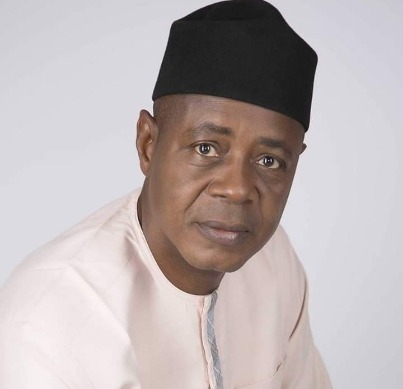
In his opening address, Faith and Freedom Africa’s Country Representative, Mr. Felix Joseph Samari, set the tone by emphasizing that the engagement was neither a forum for dismissing concerns nor a reactionary response to external pressure. He described it as a leadership-driven effort to understand the CPC designation within its proper technical, legal, and diplomatic context and to reclaim Nigeria’s narrative through credible, locally grounded engagement.
Mr. Samari explained that the CPC framework is rooted in the United States’ International Religious Freedom Act of 1998, which obliges the U.S. government to identify countries where violations of Freedom of Religion or Belief are considered systemic, ongoing, and egregious. He outlined the designation process, noting that it draws on reports from U.S. embassies, submissions by religious and civil society actors, and assessments by the U.S. Commission on International Religious Freedom, which subsequently makes recommendations to the U.S. Department of State for final executive action. 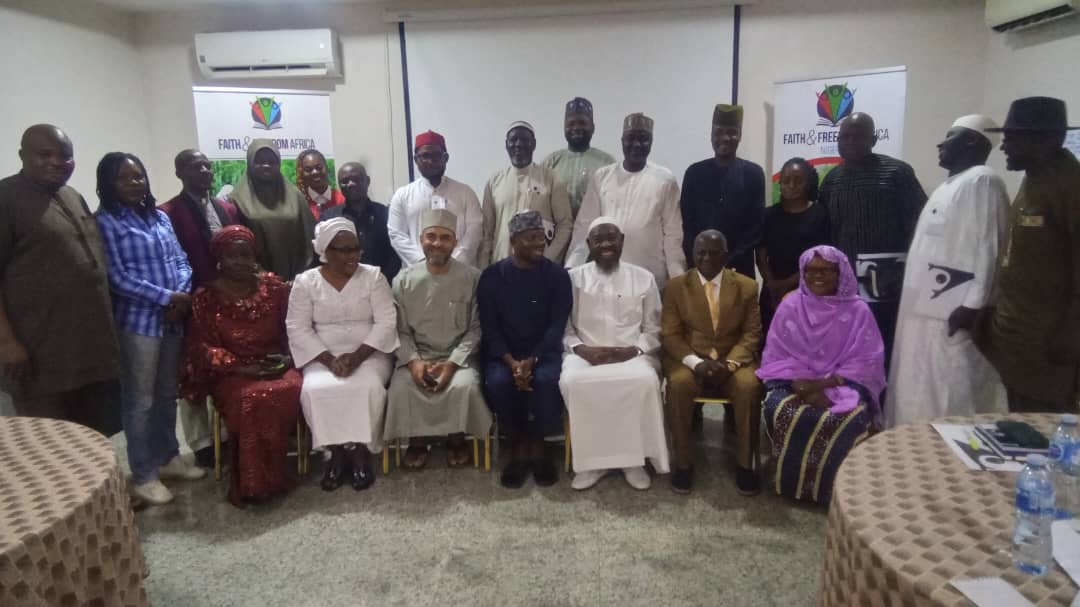
According to him, Nigeria’s principal challenge in responding effectively to the CPC designation lies not only in its security situation but in the lack of credible, structured, and nationally owned data on Freedom of Religion or Belief violations. He warned that when such sensitive issues are left solely to external actors, Nigeria risks losing control of its narrative, especially where those actors may lack sufficient access to local realities, historical context, and lived community experiences.
During a technical session he facilitated, Mr. Samari expanded participants’ understanding of Freedom of Religion or Belief violations, stressing that they go far beyond mass killings and headline-grabbing attacks. He explained that violations also include everyday realities such as denial of access to worship spaces, discrimination in educational institutions and workplaces, harassment of students and civil servants, selective enforcement of regulations, and restrictions on religious practices during periods of insecurity.
He further clarified that attacks on communities during religious festivals, even when driven primarily by criminal or economic motives, still constitute Freedom of Religion or Belief violations because they directly impede the ability of individuals to worship freely and safely. Participants were reminded that the absence of accessible reporting channels and institutional focal points for victims, particularly women, children, students, and public-sector workers, has resulted in widespread underreporting, weakening Nigeria’s position in international advocacy.
Mr. Samari also recalled that Nigeria was similarly designated a Country of Particular Concern in 2020 with minimal public awareness or structured domestic engagement. He argued that the current designation should therefore be seen as an opportunity to establish credible monitoring systems, strengthen institutions, and engage international partners with evidence rather than emotion.
In a goodwill message, Sheikh Muhammad Nuru Khalid, former Chief Imam of the Apo Legislative Quarters Mosque, Abuja, commended Faith and Freedom Africa for convening what he described as a timely and courageous platform for honest national reflection. He praised the organization’s emphasis on Freedom of Religion or Belief as a shared civic value rather than a tool for religious division.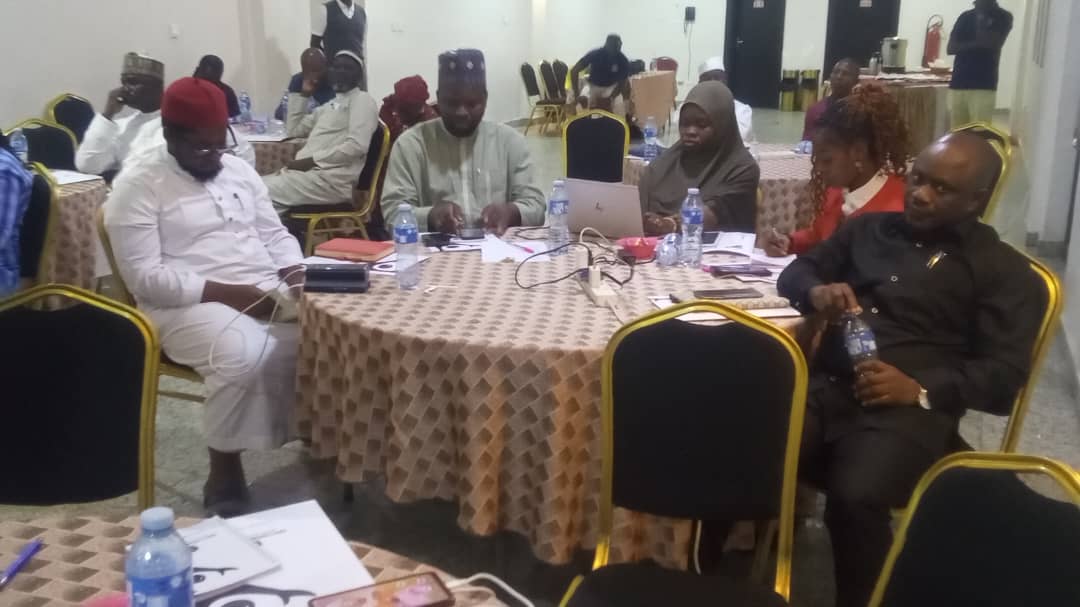
Sheikh Khalid noted that the CPC designation has sparked intense reactions, misinformation, and polarized narratives across the country, cautioning against allowing emotions, conspiracy theories, or sectarian sentiments to dominate public discourse. He warned that such approaches ultimately erode national unity and credibility, stressing that without reliable, locally generated data and inclusive dialogue, Nigeria would continue to struggle to present a nuanced account of its complex security, communal, and governance challenges, which are often oversimplified internationally as purely religious conflicts.
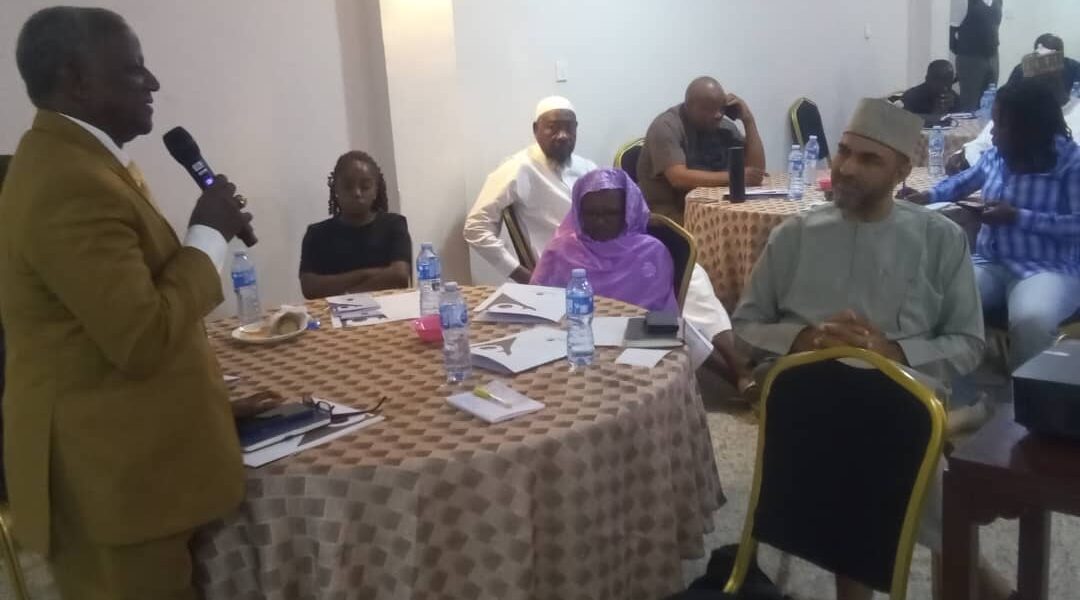
The second major presentation was delivered by Sheikh Muhammad Nurudeen Lemu, a respected Islamic scholar, educator, and peacebuilder, who shifted the discussion from diagnosis to responsibility and strategic advocacy. Drawing from his extensive work in interfaith dialogue, peacebuilding, and Shariʿah Intelligence, he challenged Nigerians to critically assess the narratives they project about themselves at home and abroad.
Sheikh Lemu warned that many violent conflicts in Nigeria originate in injustice, poverty, frustration, weak institutions, and impunity long before they are framed along religious or ethnic lines. He argued that tolerating injustice creates fertile ground for violence and manipulation. Emphasizing that justice is a shared moral foundation across all faith traditions, he called on religious leaders and civil society actors to move beyond condemnation toward proactive strategies that promote love, social cohesion, early intervention, accountability, and credible mediation mechanisms.
He further cautioned that Nigeria’s projected population growth requires urgent, forward-looking policies to address exclusion, inequality, and youth frustration, warning that failure to act decisively could escalate existing tensions into broader instability.
A high-level roundtable session examined the diplomatic, security, and reputational implications of Nigeria’s CPC designation. Participants acknowledged that the label affects the country’s global image, international partnerships, development assistance, security cooperation, and the everyday experiences of Nigerians abroad, including increased scrutiny at international borders. While these consequences were viewed as serious, the discussion also framed the designation as an opportunity, if properly managed, to initiate reforms, strengthen institutions, improve data credibility, and engage the international community from a position of transparency and confidence.
Goodwill messages from stakeholders reinforced calls for responsible leadership, civic maturity, and collective ownership of peace. A representative of the Muslim Youth Council of Nigeria expressed concern over the declining quality of public discourse, urging Nigerians, particularly young people, to reject violence and inflammatory rhetoric, while noting that crises ultimately harm all communities irrespective of faith or ethnicity.
Imam Haroun Ahmed Ezeh, one of the three Imams of the National Mosque, Abuja, emphasized the shared responsibilities of government and citizens in addressing insecurity and religious freedom concerns. He drew attention to delays in diplomatic appointments and weak institutional coordination, which he said have diminished Nigeria’s international voice, and urged honest engagement with national challenges without wishing the country harm.
From the Christian perspective, Reverend Godwin praised Faith and Freedom Africa for fostering an inclusive platform for honest engagement. He argued that Nigeria has failed to tell its own story effectively, allowing harmful narratives to gain international traction. While rejecting the portrayal of criminal violence as inherently religious, he cautioned against branding terrorists by faith and urged religious leaders to be more consistent and vocal in condemning violence.
Representing women’s perspectives, Hajia Fatima Isah Ndako of the Federation of Muslim Women’s Associations in Nigeria, Abuja, reflected on earlier periods of peaceful coexistence, attributing current tensions largely to political manipulation, poverty, and ignorance of authentic religious teachings. She called for sustained dialogue, women-led peace initiatives, and community education to rebuild trust. From a humanist standpoint, Ebeben Joy, Coordinator of the Humanist Association of Nigeria in the Federal Capital Territory, linked the CPC debate to deep-rooted social polarization and advocated education reforms that promote critical thinking, shared civic values, and respect for human dignity beyond religious boundaries.
As the engagement drew to a close, participants agreed that Nigeria’s CPC designation should be addressed through introspection, data-driven advocacy, and coordinated national action rather than hostility, denial, or conspiracy narratives. There was broad consensus on the need for independent mechanisms to measure Freedom of Religion or Belief and human rights conditions, stronger community-level monitoring and reporting structures, sustained interfaith collaboration, public education, and constructive engagement with government institutions at all levels.
In his closing remarks, Archbishop Joe Jatau Yari, former Executive Secretary of the Kaduna State Christian Pilgrims Board, commended the depth of discussion and the atmosphere of mutual respect that characterized the engagement. He urged participants to move beyond dialogue to sustained action, emphasizing that peace, justice, and religious freedom are shared responsibilities that demand courage, consistency, and national unity.
Faith and Freedom Africa reaffirmed that the engagement forms part of a broader national journey toward reform, social cohesion, and credible international engagement, stressing that Nigeria’s CPC challenge, if approached strategically, can be transformed into an opportunity to strengthen justice, security, freedom of religion or belief, and the country’s global standing for the benefit of all citizens.