
This post has already been read 21309 times!
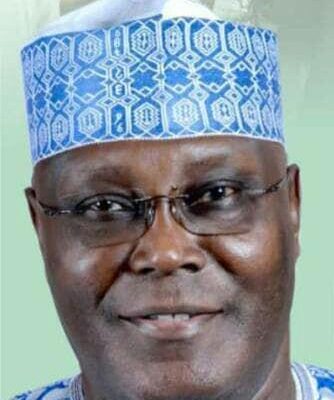
A senior presidential adviser and the international voice of President Ismail Omar Guelleh has resigned, delivering a rare and scathing public rebuke of the long-serving leader’s governance and warning against moves to extend his tenure.
The departure of Alexis Mohamed, who served as a close adviser and the president’s main international spokesman since 2015, raises fresh questions about political stability, institutional integrity, and investor confidence in the strategically located Horn of Africa state.
The Resignation and its Wording
Alexis Mohamed announced his resignation in a written statement circulated to media on Monday, saying he could no longer condone a trajectory he described as “regression in democracy.” He cited four core grievances: the erosion of democratic norms, opaque economic and diplomatic agreements, the marginalisation of state institutions, and “nepotistic management of the state.” Mohamed said his decision was deliberate and had been considered for two years.
He directly rejected any constitutional amendment that would permit President Guelleh to seek re-election in the presidential poll due by April 2026, calling term limits “an essential foundation of any democracy” and describing proposed changes as “highly detrimental” to the republic. Mohamed’s public refusal to back a constitutional revision is unusual coming from a member of the inner circle and marks an emphatic break with the presidency he represented abroad.
Political Context and Why this Matters
Ismail Omar Guelleh has led Djibouti since 1999, succeeding the nation’s founding president after long service as his chief of staff. Under Guelleh’s rule Djibouti has grown into a key international maritime and military hub, hosting bases and facilities for major powers and global shipping lines. That strategic significance has brought large-scale infrastructure investment, commercial port development, and heightened diplomatic engagement.
At the same time, critics and domestic opponents have long accused the administration of constraining political pluralism, concentrating power in the presidency and its allies, and delivering elections with lopsided outcomes. Guelleh was re-elected in April 2021 with more than 97 percent of the vote, and his ruling coalition, the Union for the Presidential Majority (UMP), controls parliament—factors that detractors point to as evidence of shrinking democratic competition.
Mohamed’s resignation adds an atypical voice from within the ruling circle to those longstanding concerns and signals that internal unease about governance and succession may be broader than publicly visible.
Economic and Investor Implications
Djibouti’s economy, though small, is tightly interwoven with its geopolitical role. Revenues from port fees, logistics, and foreign military presence have underpinned a string of infrastructure projects and attractive partnerships.
For external investors, political continuity has been a source of predictability; for others, the opaque nature of some deals and the centralisation of economic decision-making have been worrying.
A high-profile resignation that highlights “lack of transparency in economic and diplomatic agreements” could prompt closer scrutiny from commercial partners and creditors.
International corporations and states that rely on Djibouti as a strategic hub may demand clearer governance safeguards or risk assessments before greenlighting new contracts. For regional trade and logistics, any sustained political uncertainty could slow decision timelines for port expansions and transhipment deals, and could raise financing premiums for new projects.
Regional and International Dimensions
Djibouti’s value to external powers is outsize relative to its population and GDP. Major countries have naval and logistical facilities there, and the country sits astride crucial Red Sea and Gulf of Aden shipping lanes. That makes domestic political developments more than a local matter: changes in leadership, constitutional amendments, or instability risk recalibrating foreign military posture, bilateral agreements, and regional engagement strategies.
Mohamed’s role as an international spokesman means his criticisms will be heard directly by foreign interlocutors who have previously engaged with him. His public break may force diplomatic partners to adjust how they engage with Djibouti’s government and could encourage international actors to press for greater transparency around contracts and institutional checks.
Reactions and Likely Domestic Fallout
At the time of publication, the presidency had not issued a detailed public rebuttal to Mohamed’s statement. Within Djibouti, the resignation is likely to reverberate across political, business, and civil society circles.
Opposition groups and civic activists may use the moment to amplify calls for respect for term limits, constitutional safeguards, and transparency in state dealings. Conversely, the ruling party and its supporters may move to contain dissent internally and emphasize continuity to reassure investors and allies.
Mohamed’s decision not to endorse a constitutional amendment to remove the age limit for presidential candidates places a spotlight on the legal route that would be required for President Guelleh, who is over 75, to seek another term. Any formal attempt to change the constitution would be politically sensitive and could provoke legal challenges, parliamentary maneuvering, and public debate ahead of the 2026 vote.
Alexis Mohamed’s resignation is a rare, high-profile rupture within Djibouti’s ruling establishment that draws attention to governance practices at a critical juncture.
For a country whose strategic value exceeds its size, the episode could reshape conversations about succession, transparency, and the balance between stability and democratic accountability—questions that will matter both inside Djibouti and among the international partners that rely on its ports and facilities.