YPP Presidential Candidacy: Peter Agada Vows To Rescue Nigeria From Borrowing, Waste, Speaks on Opposition Coalition

This post has already been read 2377 times!
August 21, 2026, is a significant date in Nigeria’s political history, with the Young Progressives Party (YPP) conducting its final substitution primary to elect its presidential candidate for the 2027 general elections. In a major departure from conventional electoral practices, the nationwide exercise is expected to be conducted through online voting.
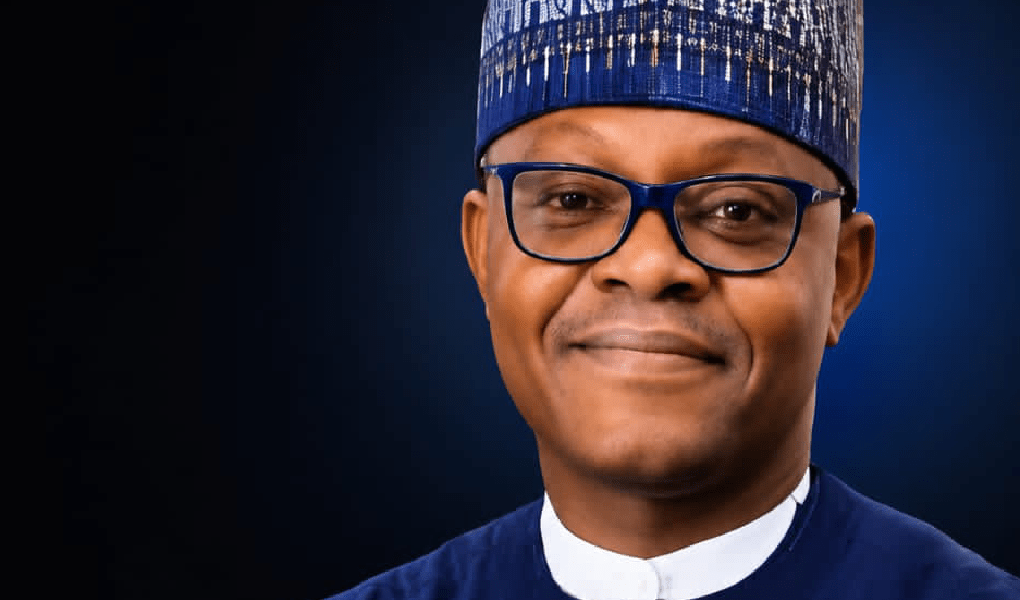
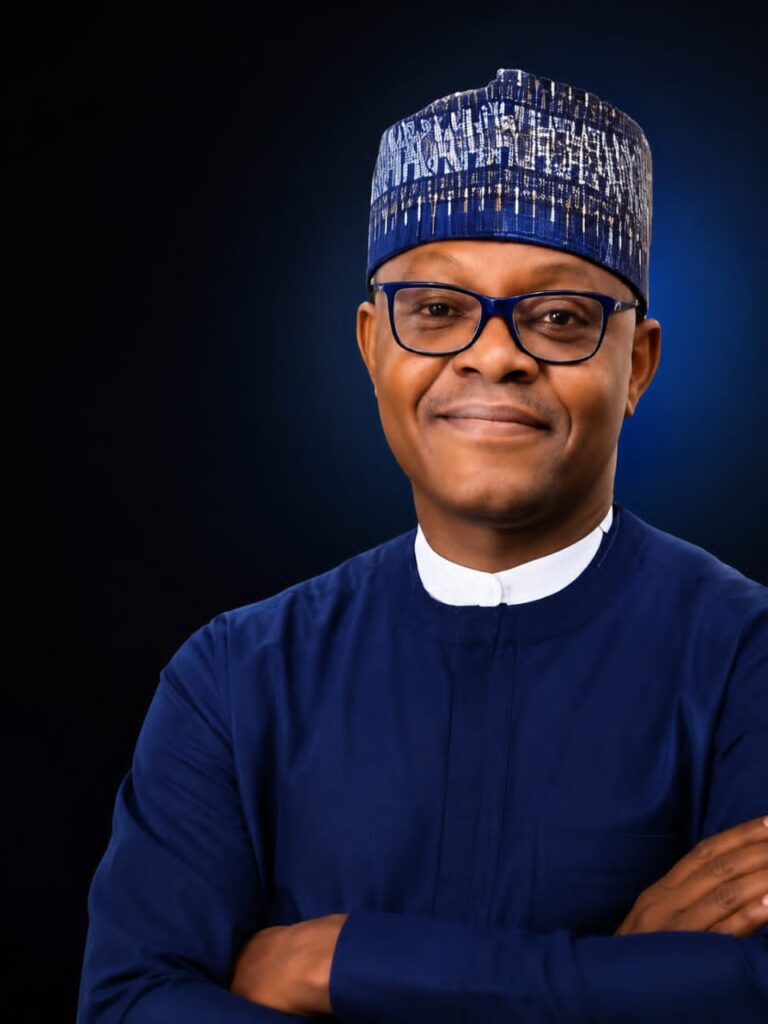
The substitution primary is also expected to pave the way for the emergence of Arc. Dr. Peter Agada as the YPP’s presidential candidate, following his growing political profile and extensive consultations across the country.
A renowned architect, entrepreneur, policy developer and new-generation politician, Agada is a former Labour Party presidential aspirant and the pioneer proponent of the LabourDirect system of government, a governance philosophy built around production, economic inclusion, grassroots development and responsible management of public resources.
Since entering the national political spotlight in May, Agada has embarked on an intensive campaign of ideas, consultations and grassroots engagement, presenting his vision for a fundamentally different approach to governance in Nigeria.
His recent engagements began in Lagos with an address at the launch of Pastor Tunde Bakare’s three-part book series on August 2 at the Citadel Global Community Church (CGCC). From there, Agada embarked on a cross-country consultation involving political stakeholders, youth leaders, opinion groups, professional bodies, ethnic associations, traditional and religious leaders, as well as Nigerians in the Diaspora.
The consultations culminated in Abuja on Monday, August 17, where he engaged multimedia platforms, political stakeholders and representatives of various interest groups in discussions focused on Nigeria’s development challenges and his LabourDirect governance philosophy.
Across the physical meetings and X conferences, Agada presented LabourDirect as a framework for tackling what he describes as Nigeria’s interconnected challenges of widespread poverty, insecurity and leadership failure, while promoting integrated industrialisation, production and grassroots economic development.
A recurring theme in his engagements was the need for Nigeria to rethink its dependence on foreign borrowing and reduce the cost of governance. Agada argued that the country possesses sufficient human, natural and economic resources to finance a substantial part of its development if corruption, waste and institutional leakages are decisively addressed.
He also advanced his concept of “ward capitalism”, which he said would place greater emphasis on directing public resources towards production, education, healthcare, infrastructure and economic opportunities at the grassroots, rather than allowing excessive administrative expenditure to consume scarce resources.
According to Agada, his decision to join the YPP was largely driven by what he described as the ideological compatibility between the party and his vision for production, inclusion and grassroots development. He maintained that he has no interest in belonging to a political organisation without the ideological foundation and policy direction required to transform Nigeria.
In this interview, Agada speaks extensively on his decision to move from the Labour Party to the YPP, his relationship with the party’s leadership, the future of LabourDirect, ward capitalism, youth economic inclusion, coalition politics, foreign borrowing, lean governance and his political plans beyond the 2027 general elections.
Below are excerpts from the interview, alongside key positions he expressed during recent conferences, consultations and engagements with stakeholders across the country.
Excerpts:
What challenges have you faced ahead of the substitution primary in the YPP?
The YPP is a veritable ideology-driven political party, which has been registered for years. It has an ideologically brilliant and potent constitution vital to the rescue of Nigeria from its chronic leadership failures of many years. That is very important for me.
From the leadership I have interacted with —the National Chairman, Bishop Amakiri; the National Secretary; the Deputy National Chairman, Amb. Dr. Nana Aisha Mahmoud; and members of the National Working Committee — I have encountered people who, in my assessment, genuinely want to build their party and build this nation.
When you have a leadership that is concerned about the quality of people coming into a political party and what they intend to offer the country, you are already taking the necessary steps towards nation-building.
They don’t simply ask what you have, financially speaking. They want to know: Who are you? What do you represent? What do you intend to do for Nigeria? What impressed me particularly is the premium the party leadership places on ideas and values.
I presented myself and my programme. I explained what I believe Nigeria requires and the reforms I intend to pursue.
What became evident was that there was substantial compatibility between my programme and the philosophy of the YPP. It fitted almost like a jigsaw puzzle.
My political ideology filled a space within what the party itself was seeking in a presidential candidate.
Since then, several support groups and individuals have begun identifying with the programme.
A political party must have the capacity to separate serious nation-builders from people who merely want a platform.
Some of the people who helped establish the YPP eventually left the party after pursuing their political ambitions. Could the same happen with you?
The answer is a categorical no. I don’t enter a political party without first interrogating its constitution, manifesto and ideological direction. When I was in the Labour Party, one of the things that kept me there was the philosophy contained in its constitution.
I find it extremely difficult to operate politically where there is no ideology. I listen carefully to thinkers discussing Africa’s development, sovereignty and economic future. I recently listened again to Professor Jeffrey Sachs, and I also encountered Professor P.L.O. Lumumba.
There is a wider conversation taking place about the awakening of Africa and how this continent can finally assume its rightful position in the community of nations. That conversation resonates strongly with me.
If a political party has no ideological connection with these questions —production, sovereignty, development, economic inclusion and Africa’s place in the world — I cannot be found in such space. That ideological connection is something I found, and found abundantly in the YPP.
You have repeatedly criticised Nigeria’s dependence on foreign borrowing. Where are you coming from on that?
My position is straightforward. Nigeria is enormously endowed. We must interrogate why a country blessed with our population, natural resources, entrepreneurial capacity, land, minerals and human capital should remain structurally dependent on external borrowing for development as Nigeria is and choking from.
This is not an argument that every form of borrowing is inherently evil. The fundamental questions are: What are we borrowing for? Under what conditions? In what currency? What is the return on that borrowing? Are we borrowing because we have continuously refused to eliminate waste and properly mobilise our domestic resources?
I recently shared Professor Jeffrey Sachs’ remarks concerning development financing with the Deputy National Chairman of YPP, Amb. Dr. Nana Aisha Mahmoud.
Her response reinforced the conversation we have been having — that Nigeria must interrogate external financing, currency exposure and dependency much more seriously. That is precisely the conversation I want Nigerians to have.
I have developed businesses and executed major projects. Those experiences have taught me that resources must be managed carefully and deployed productively.
Nigeria cannot continue borrowing while simultaneously maintaining enormous leakages and an excessively expensive structure of government.
Before asking the next generation to repay additional debts, we should first ask ourselves: Have we stopped stealing? Have we eliminated waste? Have we reduced unnecessary government expenditure?
Have we properly mobilised our domestic resources? Are borrowed funds going into productive assets capable of generating economic returns? These questions must come first.
You have also criticised the cost of maintaining government institutions, including the Presidential Villa?
Absolutely.
The larger argument is about the cost of governance. Nigeria cannot demand sacrifice from citizens while political leadership continues operating an excessively expensive government.
My administration would pursue what I call lean governance. We should examine ministries, departments and agencies with overlapping responsibilities. Where institutions can responsibly be consolidated without undermining essential services, we should consolidate them.
We must reduce administrative waste and redirect resources towards productive economic activity.
I have made calculations regarding what could potentially be saved under a comprehensive lean-government programme within our first 100 days.
The exact figures should ultimately be subjected to proper fiscal verification, but the underlying principle remains: government must cost less so that development can receive more.
The Presidency itself must demonstrate that sacrifice. Leadership cannot ask Nigerians to tighten their belts while government loosens its own.
So, ideology was central to your decision to join the YPP?
Absolutely.
I was not merely looking for another political platform. I was looking for a political organisation whose philosophy could accommodate my broader vision of Nigeria’s development and Africa’s advancement. My worldview contains a strong Pan-African dimension. Nigeria cannot develop sustainably in isolation from Africa.
If Nigeria becomes prosperous while much of its immediate environment remains trapped in poverty, instability and underdevelopment, eventually those pressures will affect Nigeria. Therefore, our national development must also contribute to a stronger Africa.
We need discipline. We need production. We need to eliminate waste. We need to strengthen our institutions. And above all, we need political parties organised around ideas rather than personalities.
Nigeria has suffered because ideology has gradually disappeared from our politics. We must rebuild it.
Does that mean you have completely abandoned the Labour philosophy?
No.
There is a distinction between an institution’s founding philosophy and what may happen to that institution politically at a particular time in the life of that institution.
I remain deeply, indeed emphatically committed to the dignity of labour, working people, economic inclusion and social justice.
I believe Nigeria must eventually recover the authentic values around which organised labour and progressive politics were historically constructed.
My disagreement was not with Nigerian workers.
My concern was with whether the political structure available to me could presently carry the programme I was proposing.
My politics is driven fundamentally by ideology.
What is the difference between you and politicians who move from one party to another simply to obtain office?
The difference is desperation for office. I would love to serve as President because the Presidency provides an extraordinary opportunity to transform Nigeria on a large scale.
But I do not need the office at all costs. If the Nigerian people believe in my programme and give me the opportunity to serve, I will serve with everything I have.
But if circumstances require me to continue building people, businesses, institutions and a political movement outside the Presidency, I am prepared to do that too.
That is why I can say clearly that if I do not become President in 2027, I am prepared to remain in the YPP and continue building. This project cannot be reduced to one election.
Politics requires sacrifice. Building an institution when immediate electoral success is uncertain requires even greater sacrifice. I am prepared to build for the long term.
Why enter the presidential race now rather than wait until 2031?
Because Nigeria’s problems will not wait.
I have a thriving professional career. My business has opportunities for international expansion, including in the United Kingdom. I could have concentrated exclusively on expanding my business internationally. But I began asking myself difficult questions.
What happens to Nigeria’s younger generation between now and 2031? What happens to millions of children currently outside the formal education system?
What happens to unemployment? What happens to insecurity? What happens to the millions of young Nigerians who feel disconnected from the economy and political system? Will they still believe in Nigeria four or five years from now? Those questions disturb me.
I see myself as a bridge between an older political generation and the younger generation now emerging. I have interacted with important figures from the older generation and also understand the frustrations and aspirations of younger Nigerians.
Young Nigerians constitute an enormous demographic force, yet many feel economically and politically marginalised. That is one of the reasons I entered the race. I am not desperate for office. I am responding to the urgency of Nigeria’s situation.
Let’s talk about coalition politics and 2027. Is there a possibility of the YPP joining a coalition ahead of the 2027 elections?
My first question would be: a coalition around what? Coalition for coalition’s sake does not solve Nigeria’s problems.
A coalition cannot simply be a gathering of politicians whose only common objective is removing another from office. What happens the morning after victory?
What economic philosophy governs? What happens to education? What happens to healthcare?
What happens to production? What happens to the wards? What happens to young people? What happens to workers? What happens to our fiscal structure? Those questions must be answered.
I describe myself broadly as a centre-to-left political thinker. I believe strongly in enterprise, investment and markets, but I also believe the economy must protect citizens and deliberately expand economic opportunity. I cannot enter a coalition whose philosophy contradicts those fundamentals.
What, therefore, would be your condition for joining any coalition?
Ideological compatibility. Any serious political alignment must answer one central question: how will 230 million Nigerians become participants in the economy rather than spectators?
We cannot sustain an economic structure in which prosperity is concentrated amongst a small percentage of citizens while millions remain trapped in poverty.
Young Nigerians must become economically active today, not merely be described ceremonially as “leaders of tomorrow.”
Leadership must also demonstrate sacrifice. The political class cannot continue living at one economic level while ordinary Nigerians are asked to endure another.
That is why any talk involving coalition must be built around an agreed programme for national reconstruction – not merely electoral arithmetic.
You have repeatedly spoken about “Ward Capitalism.” What exactly does it mean?
The concept of ward capitalism is my attempt to answer a fundamental Nigerian question. How do we make economic development reach the citizen where the citizen actually lives?
Nigeria has operated for too long with development concentrated and centred at the centre. Resources move upward. Decisions are taken upward. Opportunities flow and remain upward. All of this while millions of people at the grassroots wait endlessly for development to trickle down. I want to reverse that equation. The social-economic model and vehicle for doing so is what I call “ward capitalism.”
Under ward capitalism, the ward becomes an important economic development unit. This means creating mechanisms through which capital, enterprise support, infrastructure, production incentives and measurable development programmes reach communities and hamlets directly, while retaining appropriate constitutional oversight and accountability.
The philosophy is simple. ABUJA – Ward – Enterprise – Production – Prosperity.
That is fundamentally different from the false mirage of many decades that concentrating and distributing resources from Abuja and hoping prosperity eventually reaches everybody.
Building a presidential structure without governors is a herculean call. If INEC eventually recognised you as the YPP’s presidential candidate, how do you plan to build a national electoral structure when your party does not currently possess the number of governors, senators, representatives and local government chairmen enjoyed by the larger parties?
That is precisely why we must build differently. If we attempt to reproduce the establishment parties’ structures using our lesser resources, we will be competing on their strongest terrain. So, instead, we are building a movement.
Young people have been economically excluded for decades. That exclusion also affects political participation. Consider what it costs merely to purchase nomination forms in some political parties.
When participation becomes unaffordable by leadership gifted young people or prohibitively expensive, talented young people, women, professionals and ordinary citizens are effectively excluded before the election even begins. I therefore advocate for political participation to remain accessible.
Our objective is to build an army; not an army of violence but an army of citizens, organisers, volunteers, professionals, women, young people and grassroots mobilises. And an army that must survive beyond 2027.
If we reach a particular level in 2027, we will continue building from there towards 2031 and beyond. That is how sustainable political movements are constructed.
How many people has your movement brought into the YPP since you joined?
The numbers are growing substantially. I don’t want to give you a final figure that has not been completely reconciled because membership registration is ongoing. The party Secretariat provides periodic updates, and we continue seeing new registrations.
From The Movement Nigeria network itself, we have witnessed significant mobilisation, and my ambition is to reach approximately 20 million people by December.
But there is an important distinction. Not everybody supporting our movement will necessarily become a card-carrying YPP member. The Movement Nigeria has people from different political backgrounds and many who previously had no party affiliation. What unites them is concern about Nigeria’s economic future. Therefore, it would be a mistake to calculate our potential electoral support solely by counting YPP membership cards.
There are Nigerians belonging to other parties who may ultimately vote for our programme. Our job is to persuade them.
What is your position on independent candidates, particularly when Nigerians increasingly question the ideological inconsistency of political parties?
I believe Nigeria should seriously consider a credible framework for independent candidacy.
If our constitutional system permitted it effectively, my political profile could naturally fit such a model because my philosophy does not sit neatly within the conventional extremes of right-wing capitalism or left-wing socialism. I am somewhere around the centre-left. That is partly why I developed the social-economic concept of “ward capitalism.”
I believe in investment. I believe in enterprise. I believe in a competitive private sector. I believe in markets. But I also believe government has fundamental social responsibilities.
Such as?
Education and healthcare. Education cannot be treated as a luxury. My own life demonstrates the transformative power of access to education.
I was not born with a silver spoon. Public investment in education created opportunities that helped me become who I am. That is why I find the deterioration of our educational system deeply troubling.
When millions of Nigerian children remain outside school, we are not merely facing an educational problem. We are creating a future economic, security and national-development crisis of frightening proportions.
Healthcare is equally fundamental. No Nigerian should be condemned to unnecessary suffering simply because he or she is poor and cannot afford basic education or healthcare. Government exists because citizens collectively surrender resources and authority to institutions that are meant to protect their welfare and create the conditions for prosperity. That social responsibility must never disappear.
Now that you are in the YPP, what happens to LabourDirect, which was initially structured around the labour movement?
LabourDirect continues, even stronger. In fact, the YPP is now taking ownership of the programme politically because there are substantial points of convergence between LabourDirect and the party’s philosophy.
Recently, the National Chairman of the party, the distinguished Bishop Amakiri, received the detailed LabourDirect document and engaged with it enthusiastically.
The underlying philosophy of LabourDirect remains unchanged. It is about connecting government, labour, production, technology, accountability and citizens directly.
The platform through which we pursue that philosophy may change, but the mission does not. I remain committed to the working class and working people of Nigeria. I remain committed to economic inclusion. I remain committed to the dignity of labour.
And I remain committed to building an economy where Nigerian workers and young people participate in the wealth they help create.
My relationship with ideologically committed individuals in the Labour Party is is without debate. It is one defined by immeasurable interpersonal respect and abiding unity in the universal workers centred labour ideology.
For example, Senator Nenadi Usman and I have had conversations and resolved issues arising from my previous engagement with the party, including the refund of money I had paid following developments concerning the zoning of the presidential ticket. But politically, I have moved forward.
Today, the vehicle is the Young Progressives Party. And through that vehicle, we intend to take LabourDirect, ward capitalism, lean governance democratic model, economic inclusion, production-led growth and grassroots development to Nigerians.
On the buzz word “coalition” which currently rules the political waves of Nigeria, take my word for it and carve it in brass. I am not looking for office at all costs. Ultimately, my politics comes down to one thing: Nigeria must work for Nigerians.
I don’t want power simply because power is available. I don’t want a coalition simply because a coalition might win. And I don’t want a political party simply because it has a ballot line. There must be an ideology. There must be a programme. There must be sacrifice. There must be measurable development. There must be economic inclusion.
And there must be a pathway that allows the Nigerian child – whether born in Kano, Gombe, Zamfara, Enugu, Imo, Rivers, Lagos or anywhere else—to believe that this country belongs to him or her. Once those elements are missing count me out.
That is why I am in the YPP. That is why I am building this movement, The Movement Nigeria. And that is why, whether the journey of the Presidency materializes in 2027 or continues beyond it, I shall remain committed to this cause. The cause of pan-Nigeria social-economic emancipation and development without tribal boundaries, discrimination or segregation.