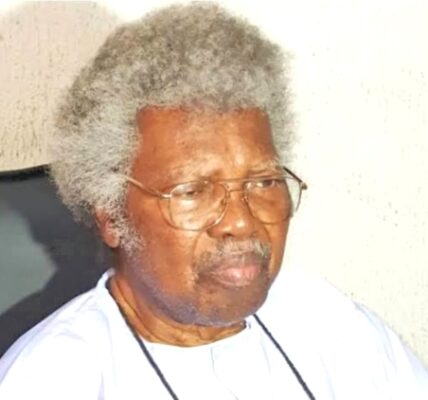

Membership Growth, Retention Key To Stronger Rotary Clubs — AG Fasipe

This post has already been read 2313 times!
The Assistant District Governor (AG), Rotary International District 9127, Rtn. Sunday Fasipe, has challenged Rotary clubs to adopt deliberate strategies for attracting, engaging and retaining members, saying sustainable membership growth is critical to the strength and effectiveness of the organisation.
Fasipe gave the charge while speaking on “Membership Recruitment and Retention: My Experience” during the fellowship meeting of the Rotary Club of Abuja United, District 9127, on Thursday.
The lecture, delivered as part of activities marking August 2026 Membership and New Club Development Month, provided practical insights into the importance of membership development and the need for Rotary clubs to create an environment in which members feel valued, engaged and motivated to serve.
Drawing from his years of experience in Rotary, Fasipe said his journey through various leadership positions had given him valuable lessons on what makes members remain committed to an organisation.
He disclosed that he had served the Rotary Club of Abuja Kubwa Gateway as Club Director on two occasions, Vice President, President-Elect and President before assuming his current responsibility as Assistant District Governor.
According to him, membership recruitment should not be viewed as the responsibility of club executives alone, but as a collective duty of every Rotarian.
He described every member as a potential ambassador for Rotary, stressing that personal conduct, integrity, fellowship and commitment to community service could have a greater influence on prospective members than formal invitations.
“People do not remain in a club simply because they joined. They stay because they find friendship, purpose, recognition, and opportunities to make a meaningful difference,” Fasipe said.
He urged Rotarians to deliberately identify professionals, entrepreneurs, young leaders and other individuals with a passion for community development and introduce them to Rotary through fellowship activities and service projects.
Fasipe, however, emphasised that bringing new members into Rotary was only one part of the membership equation, noting that retention required continuous and purposeful engagement.
He recommended a structured welcome and orientation process for new members, including assigning mentors to help them understand Rotary, connect with other members and navigate their early experiences within the club.
The Assistant District Governor further encouraged clubs to give members opportunities to participate actively in committees, service projects and leadership assignments.
He said such involvement would create a sense of belonging and ownership while enabling members to understand that their contributions were essential to the success of the club.
Fasipe also identified recognition as an important instrument for retaining members, explaining that acknowledging members for their service, attendance, financial contributions and leadership could reinforce their commitment to the organisation.
“Simple gestures of appreciation often have a lasting impact,” he noted.
On communication, he advised club leadership to maintain open and regular channels of communication, keep members properly informed and create opportunities for them to express their views and participate in decision-making.
“A club where every voice matters naturally enjoys stronger member loyalty,” Fasipe said.
He also urged Rotary clubs to develop a culture of fairness and mutual respect, particularly in handling disagreements and conflicts among members.
According to him, effective conflict management requires fairness, empathy and respect, warning that the manner in which members are treated during disagreements can have long-term consequences for club unity and membership retention.
“Members may forget disagreements, but they rarely forget how they were treated,” he said.
Fasipe cautioned that membership recruitment without corresponding retention efforts could undermine the growth of a Rotary club.
“Recruitment without retention is like pouring water into a leaking bucket,” he said, stressing that the objective should be to build clubs where members are proud to belong, motivated to participate and willing to encourage others to join.
He maintained that when clubs create welcoming environments, provide meaningful opportunities for participation, recognise members’ contributions and remain committed to Rotary’s Service Above Self philosophy, membership growth would become a natural consequence.
The lecture underscored the importance of placing membership development at the centre of Rotary’s organisational strategy as clubs across District 9127 seek to strengthen their membership base and expand their capacity to deliver sustainable humanitarian and community service projects.